




Live Online Training

NLP with LLMs Course

Six intensive weeks on the highest-demand AI specialization of 2026. Transformer architecture, fine-tuning open-weight models, RAG systems with vector databases, and the LangChain / Hugging Face stack. Cohort capped at 18 so every learner gets direct feedback.Six intensive weeks on the highest-demand AI specialization of 2026. Transformer architecture, fine-tuning open-weight models, RAG systems with vector databases, and the LangChain / Hugging Face stack. Cohort capped at 18 so every learner gets direct feedback.

Live Online Training

6 Intensive Weeks

Fine-Tuning & RAG

Cohort Cap: 18 Students

Trusted by Learners & Professionals from Top Companies

WHY LEARN NLP WITH LLMs TODAY?

The Most In-Demand AI Specialization in 2026

WHAT YOU'LL LEARN

Tokenization & Embeddings

Transformer Architecture Deep Dive

Fine-Tuning Large Language Models

RAG System Design

Vector Databases

LangChain & Hugging Face

LLM Evaluation Methods

Production NLP Engineering

TOOLS & FRAMEWORKS YOU'LL MASTER

Hugging Face Transformers

The open-source NLP backbone

LangChain

LLM application framework

LangGraph

Stateful agent orchestration
Pinecone

Managed vector database

Weaviate

Open-source vector DB with hybrid search
Chroma

Local vector DB for prototyping

PyTorch

Deep learning backend for training

PEFT / LoRA

Parameter-efficient fine-tuning

QLoRA

Quantized LoRA for larger models

OpenAI API

GPT models in production

Anthropic API

Claude for reasoning-heavy work

LlamaIndex

Data indexing for LLM apps

COURSE CURRICULUM

01

02

03

04

05

Week 1

NLP Pipeline & Tokenization

Week 2

Transformer Deep Dive

Week 3

Fine-Tuning LLMs

Week 4

RAG Systems

Week 5

LangChain, Hugging Face & Modern NLP Stack

What You Will Learn

The Six-Week Curriculum

The curriculum is intensive and focused. Six weeks is deliberately short — the course assumes ML and deep learning foundations are already in place and concentrates entirely on the LLM-specific content the market currently values.

01

Module 1

NLP Foundations & Transformer Architecture

The first module establishes the foundation everything else builds on: modern NLP workflows, tokenization in depth (BPE, WordPiece, SentencePiece), embeddings, and the foundation model landscape (GPT, Claude, Gemini, Llama, Mistral, Qwen, Gemma).

Week 2 covers the transformer architecture at a depth beyond the introduction in Deep Learning & Neural Networks: self-attention from first principles, multi-head attention, positional encoding including RoPE, encoder/decoder/encoder-decoder variants, and scaling laws. Learners implement self-attention from scratch, then read production code in major open-weight model implementations.

You will Explore

Modern NLP Pipeline

Tokenization Deep Dive

Foundation Model Landscape

Transformer Architecture

02

Module 2

Fine-Tuning Large Language Models

Week 3 covers the fine-tuning landscape, which has expanded considerably with the rise of parameter-efficient methods. Topics include the crucial question of when to fine-tune versus when to prompt; supervised fine-tuning workflows; parameter-efficient fine-tuning (LoRA, QLoRA, prefix tuning) with hands-on work in the Hugging Face PEFT library; instruction and chat fine-tuning; a conceptual introduction to RLHF and direct preference optimization; and quantization for inference and training.

By the end of Week 3, every learner has fine-tuned at least one open-weight model on their own task using parameter-efficient methods.

You will Explore

Fine-Tune vs Prompt Decision

LoRA & QLoRA

Instruction Tuning

Quantization Techniques

03

Module 3

Retrieval-Augmented Generation Systems

Week 4 receives extended treatment because RAG is where the largest share of applied LLM work is currently happening. Topics include the RAG architecture in depth, embedding models for retrieval, vector databases (Pinecone, Weaviate, Chroma, Qdrant, pgvector), chunking strategies that determine whether RAG systems actually work, hybrid search combining semantic and keyword retrieval, cross-encoder re-ranking, and advanced RAG patterns including multi-step retrieval, query rewriting, and hypothetical document embeddings (HyDE).

You will Explore

Vector Databases at Scale

Chunking Strategies

Hybrid Search & Re-ranking

Advanced RAG Patterns

04

Module 4

Modern NLP Stack, Production & Capstone

The final block covers the applied stack and production practices. Topics include LangChain and LangGraph (balanced coverage — used where they help, avoided where they get in the way); the Hugging Face ecosystem in depth; function calling and structured outputs in production; streaming and real-time UX; caching, batching, and cost engineering; open-weight model deployment; LLM evaluation methodology; and practical safety and guardrails.

LangChain & LangGraph

Hugging Face Ecosystem

LLM Evaluation

Safety & Guardrails

The capstone project is presented in the final session — a working LLM-powered application built end-to-end, integrating fine-tuning or RAG (or both), structured outputs, evaluation, and a basic deployment.

Capstone Project

Fine-Tune • Retrieve • Ship

A working LLM-powered application built end-to-end. Fine-tuning or RAG (or both), structured outputs, evaluation, and deployment. Recent capstones: specialized domain assistants, document analysis systems, internal knowledge bases, and customer-facing chat applications.

By the end of six weeks, you'll have shipped a real LLM system — the kind of portfolio piece the top US LLM engineering roles specifically look for.

REAL-WORLD PROJECTS

Custom Tokenizer Analysis

Compare tokenization across GPT, Claude, Llama on real text.

Fine-Tuned Domain Model

Adapt an open-weight model to your domain with LoRA.
Production RAG System

End-to-end retrieval with hybrid search and re-ranking.
Structured Output Pipeline

Reliable data extraction from unstructured documents.

Full LLM Application

Capstone: fine-tuning + RAG + evaluation + deployment.

Course Format and Delivery

The course is delivered fully online through live, instructor-led sessions taught by a working NLP and LLM practitioner from the US technology market.

01

Schedule

Three live sessions per week over six weeks, in evening and weekend slots that accommodate working professionals across US time zones.

02

Live Coding & Model Work

Sessions are heavily applied. Learners write code, train models, and build systems during sessions.

03

Cohort Cap: 18 Students

The smaller cap (versus the bootcamp’s 20) reflects the more intensive nature of the material.

04

GPU Access Included

Compute for fine-tuning exercises provided through a managed GPU environment. No hardware purchases needed.

05

Code Reviews on Capstone

Capstone work receives direct, detailed code review with written feedback.

Prerequisites and Technical Requirements

Prerequisites for this course are genuine. Learners who do not meet them struggle.

ML foundation — supervised learning, evaluation, standard workflows (ML Bootcamp recommended)

Deep learning background — neural networks, training dynamics, transformer intro (DL course recommended)

Strong Python with async programming basics

Plan for 10–15 hours per week (3 live sessions + independent practice)

Why NLP With LLM Skills Matter In The Us Job Market

The Strongest AI Labor Market Right Now.

The market for NLP and LLM engineers in the US is one of the strongest in technology. Job titles requiring the skill set this course teaches include NLP engineer, LLM engineer, AI engineer, applied scientist (NLP focus), and generative AI engineer.

Compensation That Reflects the Demand.

Entry-level positions at AI-focused companies commonly start in the low-to-mid six-figure range, mid-career reaches high six-figures, and senior practitioners at frontier labs and top employers reach into seven figures. Demonstrated capability — not credentials — unlocks the higher ranges.

Beyond Prompt Engineering.

Most professionals with "AI experience" can prompt. Few can fine-tune, build production RAG systems, and evaluate LLM output rigorously. This course teaches the specialization that separates senior LLM engineers from prompt engineers.

Learn From Industry Leaders

Michael Anderson

Lead Instructor — AI & Cloud

Senior AI engineer with extensive experience designing machine learning platforms and deploying enterprise AI solutions.

David Miller

Cloud & MLOps Instructor

Cloud Architect specializing in scalable AI infrastructure, MLOps automation, and multi-cloud deployments for enterprise.

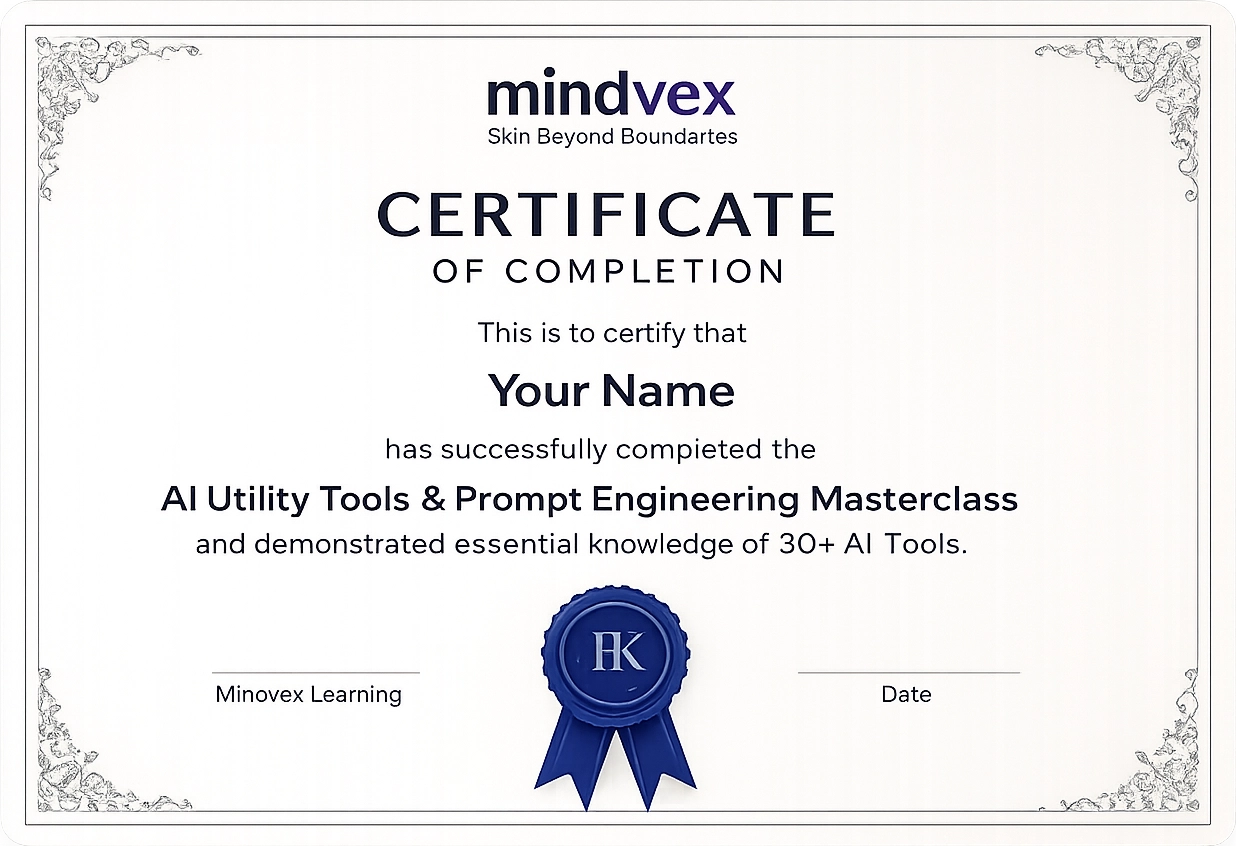
INDUSTRY RECOGNIZED CERTIFICATE

Receive an industry-recognized certificate after successful course completion.

Career Impact

Maximum cohort size
0
Weeks from DL-ready to shipping LLM applications
0
Real capstone worth showing at US AI companies
0
Top of US market for senior LLM engineers
0

What Our Learners Say

Ready To Specialize In LLMs?

Join the highest-demand AI specialization in 2026.

Frequently Asked Questions

The two are complementary. Advanced Python for LLM focuses on the software engineering side — APIs, async, agent frameworks, production engineering. NLP with LLMs focuses on the language-modeling and fine-tuning side — tokenization, transformer architecture, LoRA/QLoRA fine-tuning, RAG depth, and NLP-specific evaluation. Many learners take both, in either order, to build full-stack LLM engineering capability.

Yes. Week 3 is dedicated to fine-tuning, including LoRA and QLoRA that make it practical without industrial compute. Every learner fine-tunes at least one open-weight model on their own task.

Both. Application-building portions use API-based models (GPT, Claude, Gemini). Fine-tuning portions use open-weight models (Llama, Mistral, Qwen). Production LLM systems combine them frequently.

The intensive six-week format is sustainable alongside full-time work for most learners but is the most concentrated commitment in the Mindvex catalog. Avoid scheduling during periods of high work demands.

For most learners, yes. The transformer material and fine-tuning workflows assume working understanding of neural network training and optimization. Learners with equivalent DL experience from work or self-study can sometimes go directly.

Pinecone is the headline. Weaviate, Chroma, Qdrant, and pgvector are also covered. Selection reflects what's actually used in US production deployments.

Fundamentals (transformer architecture, fine-tuning methods, RAG patterns, evaluation) are stable. Specific models, framework versions, and tools are updated each cohort. The course does not chase every new release.

Hiring teams in this space evaluate candidates primarily on demonstrated technical work — capstones, code samples, technical depth in interviews. The course is designed to produce work that holds up to that evaluation.

Start Your LLM Engineering Journey!

Cohort cap 18. Six intensive weeks. Seats fill quickly.