





Live Online Training

Deep Learning & Neural Networks Course

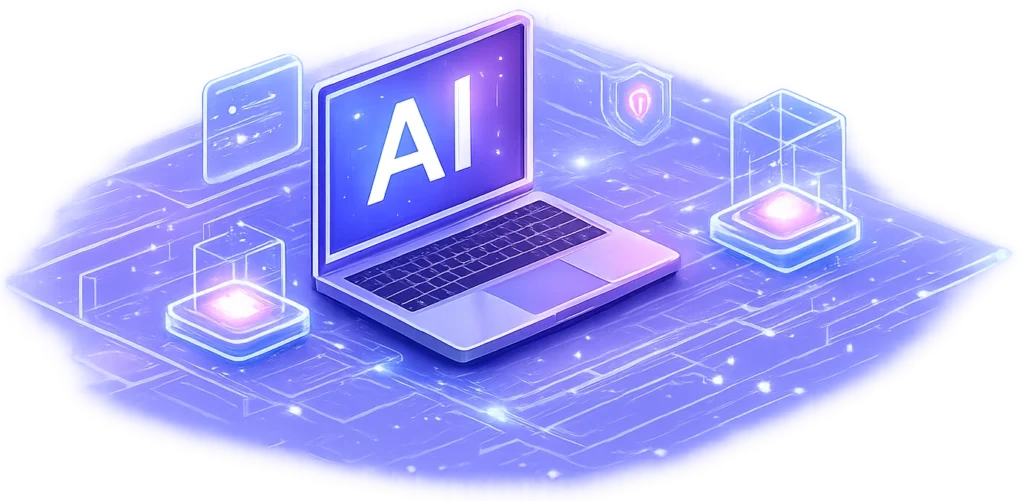
Move from classical ML to modern neural networks. Twelve weeks of live instruction covering ANNs, CNNs, RNNs, LSTMs, and the transformer architecture behind today’s AI. Live GPU lab environment, small cohort of 20, and a capstone project worth showing.

Live Online Training

Live GPU Lab

PyTorch & TensorFlow

Cohort Cap: 20 Students

Trusted by Learners & Professionals from Top Companies

WHY LEARN DEEP LEARNING TODAY?

The Engine Behind Every Modern AI Breakthrough

WHAT YOU'LL LEARN

Neural Network Foundations

Backpropagation & Optimization

CNNs & Computer Vision

RNNs, LSTMs & Sequence Models

Transformer Architecture

Transfer Learning

PyTorch Mastery

GPU Training & Deployment

TOOLS & FRAMEWORKS YOU'LL MASTER

PyTorch

The dominant deep learning framework

TensorFlow

The Google alternative, still widely used

Keras

High-level API on top of TensorFlow
CUDA

GPU acceleration fundamentals
Weights & Biases

Experiment tracking standard

MLflow

Open-source ML lifecycle tools

Hugging Face

Pretrained models and datasets
NumPy

Numerical foundation

Matplotlib

Training diagnostics and visualization

Jupyter

Standard DL workbench

ONNX

Model interchange format for deployment

TorchServe

Model serving for PyTorch

COURSE CURRICULUM

01

02

03

04

05

Week 1

Neural Network Fundamentals

Week 3

Backprop & Optimization

Week 5

Convolutional Neural Networks

Week 8

RNNs, LSTMs & Sequence Models

Week 10

Transformers

What You Will Learn

The Twelve-Week Curriculum

The curriculum is organized into four arcs across twelve weeks. Every arc builds the next, and the course is structured around hands-on implementation work in PyTorch and TensorFlow, with real models trained on real data in the live GPU lab.

01

Module 1

Neural Network Foundations

The first arc establishes the mathematical and conceptual foundation. Skipping this material is the single most common mistake in self-taught deep learning, and the bootcamp covers it deliberately and at depth.

Topics include the perceptron and multilayer network, forward propagation in detail, backpropagation from first principles (with learners deriving and implementing it before relying on PyTorch’s autograd), activation functions, loss functions, optimization algorithms (SGD, momentum, Adam, AdamW), regularization (L1, L2, dropout, batch norm, layer norm), and training dynamics — learning rate scheduling, warmup, gradient clipping.

The arc ends with the first practical project: a fully connected neural network for a tabular prediction problem, implemented in PyTorch from the building blocks.

You will Explore

Forward & Backward Propagation

Activation & Loss Functions

Optimizers Deep Dive

Regularization & Training Dynamics

02

Module 2

Convolutional Neural Networks and Computer Vision

The second arc covers CNNs, the architecture family that revolutionized computer vision and remains dominant for many image tasks. Topics include the convolution operation and its practical implications, pooling and feature extraction, CNN architectures in depth (LeNet, AlexNet, VGG, ResNet, Inception, MobileNet, EfficientNet), skip connections and residual learning, image classification end-to-end, and transfer learning — the most practically important topic in this arc.

The arc includes the second project: an image classifier built with transfer learning, trained on a real dataset, evaluated honestly.

You will Explore

Convolution & Pooling

ResNet & Modern Architectures

Transfer Learning in Practice

Image Classification Pipelines

03

Module 3

Sequence Models, RNNs, LSTMs, and Transformers

The third arc covers the architectures for sequence data and traces the path from recurrent networks to the transformer architecture that underlies modern language models. Topics include RNNs and their vanishing gradient problem, LSTMs and GRUs, sequence-to-sequence architectures, attention in its original form, and a careful treatment of the transformer — self-attention, multi-head attention, positional encoding, and the encoder-decoder stacks.

This arc also introduces pretrained language models (BERT, GPT-style) and time series forecasting with deep learning. It gives learners the architectural foundation that the NLP with LLMs course builds on directly.

You will Explore

RNNs, LSTMs & GRUs

Attention Mechanism

Transformer Architecture

Pretrained Language Models

04

Module 4

Engineering Practice and Capstone

The final arc focuses on the engineering practices that distinguish working deep learning practitioners from learners who have only trained models in notebooks. Topics include working with TensorFlow alongside PyTorch; GPU usage and acceleration; mixed precision training, gradient accumulation, and distributed training basics; experiment tracking with Weights & Biases and MLflow; model serving for deep learning; and a dedicated session on reading deep learning research papers — the skill that distinguishes mid-career practitioners from senior ones.

Mixed Precision & Distributed Training

Experiment Tracking

Model Serving & ONNX

Reading DL Research

The final two weeks are dedicated to the capstone project.

Capstone Project

Design • Train • Present

A complete deep learning project — from problem framing through trained model and written analysis. Custom image classifiers, sequence models, fine-tuned transformers, or from-scratch implementations of specific research papers.

By the end of twelve weeks, you'll have real trained models, real evaluation metrics, and a portfolio piece worth showing at deep-learning-focused US employers.

REAL-WORLD PROJECTS

From-Scratch Neural Network

Build and train a NN from the mathematical building blocks.

Transfer Learning Image Classifier

Fine-tune a pretrained CNN on your chosen dataset.

Sequence Model for Time Series

LSTM-based forecasting on real time series data.
Fine-Tuned Transformer

Adapt a BERT-style model to a text classification task.
Deep Learning Capstone

Substantive project taken from problem definition through deployment.

Course Format and Delivery

The course is delivered fully online through live, instructor-led sessions taught by a working deep learning practitioner from the US technology market.

01

Schedule

Four live sessions per week over twelve weeks, in evening and weekend slots that work for working professionals across US time zones.

02

Live GPU Lab

The course provides a live GPU lab environment used throughout the program — no cloud credits, no hardware purchases, no additional cost.

03

Cohort Cap: 20 Students

Small cohorts allow direct instructor feedback on code, training runs, and capstones.

04

Practitioner Instructor

The course is taught by an instructor with current industry deep learning experience — not a generalist trainer working from a script.

05

Capstone Code Review

Capstone projects receive detailed code review with written feedback.

Prerequisites and Technical Requirements

This is an advanced course. Prerequisites are real:

ML foundation — classical ML workflows, cross-validation, common algorithms (ML Bootcamp recommended)

Strong Python with NumPy and Pandas

Working calculus and linear algebra (derivatives, chain rule, matrix operations)

Laptop with 16 GB RAM recommended; no local GPU required — lab is provided

Why Deep Learning Skills Matter In The Us Job Market

The Gateway to Specialized AI Roles.

Deep learning skills open a specific class of roles that classical ML alone does not — applied research positions, computer vision engineering, deep learning engineering at AI-first companies, and technical roles inside foundation model labs. These roles pay differently and stay in strong demand.

The Transformer Foundation.

The transformer architecture behind every modern LLM is deep learning. Understanding it deeply — not just using it — is what distinguishes serious LLM engineers from prompt engineers. This course teaches that foundation.

Compensation With a Wider Spread.

Deep learning compensation has a wider spread than most technical roles because the gap between general practitioners and exceptional ones is unusually large. Entry-level roles start in the low six-figures, mid-career reaches high six-figures, and senior practitioners at frontier labs and competitive employers can reach seven figures. The course teaches the material the top of that market expects.

Learn From Industry Leaders

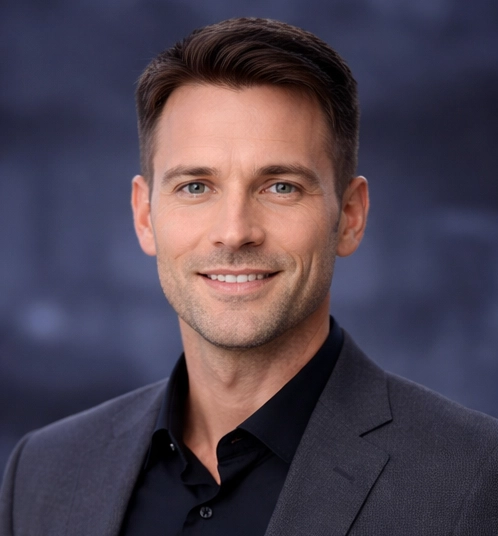
Michael Anderson

Lead Instructor — AI & Cloud

Senior AI engineer with extensive experience designing machine learning platforms and deploying enterprise AI solutions.

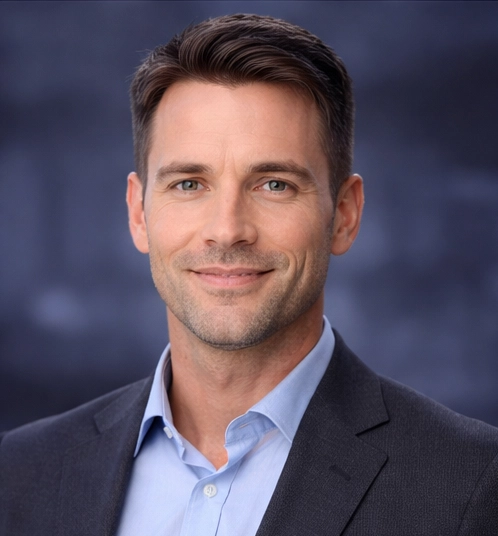
David Miller

Cloud & MLOps Instructor

Cloud Architect specializing in scalable AI infrastructure, MLOps automation, and multi-cloud deployments for enterprise.

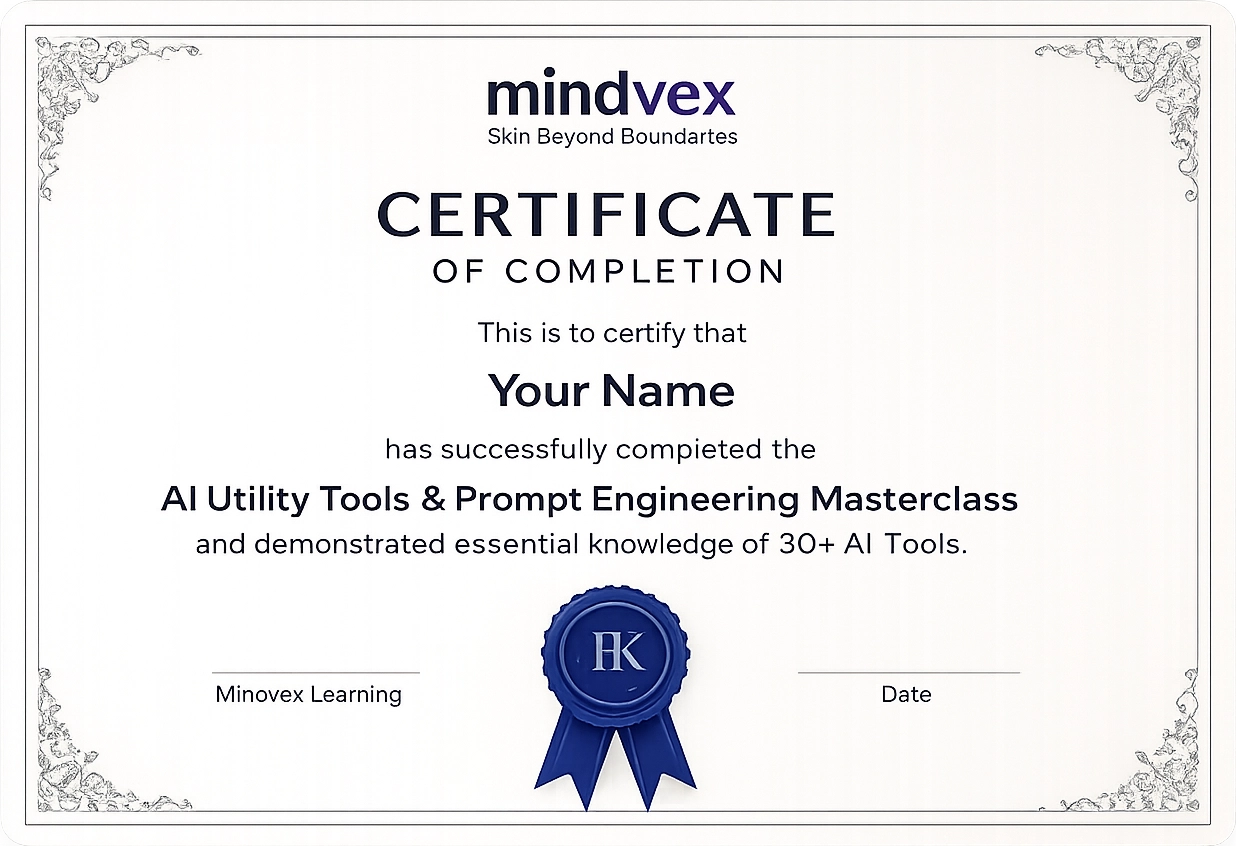
INDUSTRY RECOGNIZED CERTIFICATE

Receive an industry-recognized certificate after successful course completion.

Career Impact

Maximum cohort size
0

GPU Lab

Included, no extra cost

Weeks from ML-ready to modern deep learning
0
Top of US market for senior deep learning practitioners
0

Ready To Master Modern Deep Learning?

Join a cohort of committed practitioners learning at the level real DL roles require.

Frequently Asked Questions

Working calculus and linear algebra. That means comfortable with derivatives, the chain rule, vectors, matrices, and matrix multiplication. Not graduate-level, but the undergraduate foundation. Learners without that math will find the first arc frustrating.

For most learners, yes. The bootcamp covers the evaluation, feature engineering, and modeling discipline that deep learning practitioners still need even when working with neural networks. Learners with equivalent ML experience from work or self-study can sometimes go directly.

Yes. PyTorch-first because it dominates research and most modern industry, but TensorFlow and Keras are also covered. Learners finish the course able to work in both.

The course covers the foundational architectures (CNNs, RNNs, transformers) and modern best practices that have stabilized. It does not chase every new architecture published in the past month because most do not last. The reading-research-papers session in Arc 4 gives learners the skill to follow new developments independently.
The transformer architecture is covered in depth in Arc 3 — self-attention, multi-head attention, encoder-decoder. The engineering of LLM applications is the focus of NLP with LLMs and Advanced Python for LLM & Multi Agent Systems. This course gives the architectural foundation both of those build on.
No. The course provides a GPU lab environment throughout.
The course gives a working foundation that supports either applied or research paths. Research-track learners may want to supplement with formal coursework in advanced math and research methodology.
Recommendation is sequential, not parallel. Both courses run at four sessions per week with substantial outside workload. Sequential enrollment is the right approach.

Start Your Deep Learning Journey!

Cohort cap 20. GPU lab included. Seats fill in advance.