






Live Online Bootcamp

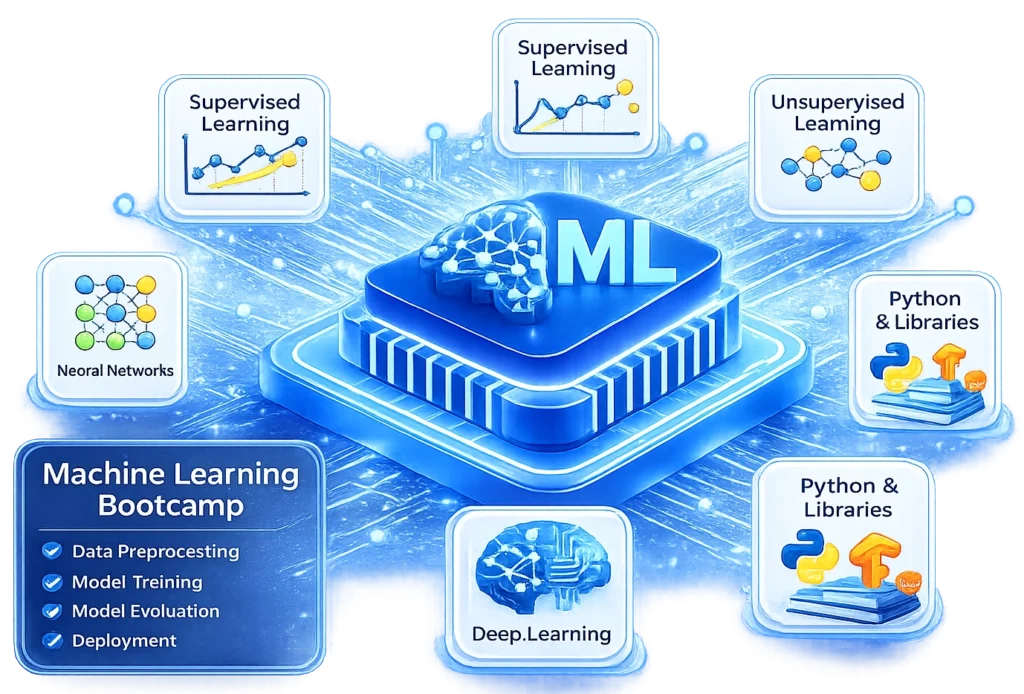
Machine Learning Bootcamp

The flagship ML bootcamp at Mindvex. Twelve weeks, four live sessions per week, three real capstone projects, and industry mentor Q&As. Move from Python-comfortable to working ML practitioner — cohort capped at 20 students so every learner gets direct instructor feedback.

Live Online Training

Cohort Cap: 20 Students

3 Capstone Projects

Industry Certificate

Trusted by Learners & Professionals from Top Companies

WHY LEARN MACHINE LEARNING TODAY?

The Skill That Defines Modern Data Careers

WHAT YOU'LL LEARN

Supervised Learning

Unsupervised Learning

Feature Engineering

Model Evaluation & Cross-Validation

Scikit-Learn Mastery

Gradient Boosting (XGBoost / LightGBM)

Deployment Basics (Flask / FastAPI)

End-to-End Real-World ML

TOOLS & LIBRARIES YOU'LL MASTER

Python

The core language of ML
Scikit-Learn

The standard ML toolkit

Pandas

Data preparation for ML

NumPy

Numerical foundation

XGBoost

Industry-standard gradient boosting

LightGBM

Fast gradient boosting from Microsoft

CatBoost

Categorical-friendly gradient boosting

Matplotlib

Model diagnostics and visualization

Seaborn

Statistical visualization

Jupyter

Standard ML workbench
Git & GitHub

Portfolio and version control

Flask / FastAPI

Deploying models as APIs

COURSE CURRICULUM

01

02

03

04

05

Week 1

Linear & Logistic Regression

Week 3

Trees & Ensembles

Week 5

Unsupervised Learning

Week 8

Evaluation & Feature Engineering

Week 11

Deployment Basics

What You Will Learn

The Twelve-Week Curriculum

The curriculum is organized into four major arcs across twelve weeks. Each arc builds on the previous one, and the course as a whole is structured around three capstone projects rather than passive coverage of material.

01

Module 1

Supervised Learning from First Principles

The first arc covers the supervised learning algorithms that form the working core of most production ML systems in the US. Each algorithm is introduced with the intuition first, then the underlying mathematics at an applied level, then the working code. Learners do not just call model.fit() — they understand what is being optimized, why, and what can go wrong.

Algorithms covered in depth include linear regression, logistic regression, decision trees, random forests, gradient boosting machines (XGBoost, LightGBM, CatBoost), and support vector machines at a working level. The arc also covers how to split data correctly, how to avoid data leakage (the single most common failure mode in real ML projects), and how to set up reproducible training pipelines.

The arc ends with Capstone 1: a complete supervised learning project on a real US dataset.

You will Explore

Linear & Logistic Regression

Decision Trees & Random Forests

Gradient Boosting Deep Dive

Reproducible Training Pipelines

02

Module 2

Unsupervised Learning and Dimensionality Reduction

The second arc covers the unsupervised methods that find structure in unlabeled data — increasingly important in customer segmentation, fraud detection, anomaly monitoring, and exploratory analysis at scale.

Topics include K-means clustering, hierarchical clustering, DBSCAN, principal component analysis, t-SNE and UMAP for high-dimensional visualization, and an introduction to anomaly detection using statistical and ML-based approaches. The arc emphasizes interpretation alongside technique — unsupervised methods produce results that look meaningful even when they are not, and learning to evaluate unsupervised output honestly is a key skill.

You will Explore

K-Means & Hierarchical Clustering

DBSCAN & Density Methods

PCA & Dimensionality Reduction

Anomaly Detection

03

Module 3

Scikit-Learn, Evaluation, and Feature Engineering

The third arc is the most practically intensive. It covers the working patterns that distinguish junior ML practitioners from senior ones: rigorous evaluation, careful feature engineering, and the disciplined use of scikit-learn pipelines.

Topics covered include scikit-learn pipelines for building reproducible, leak-free training workflows; cross-validation strategies (k-fold, stratified, time-based); hyperparameter tuning; evaluation metrics in depth (accuracy, precision, recall, F1, ROC-AUC, RMSE, MAE, R², log loss); feature engineering patterns; handling imbalanced data; and the discipline of avoiding data leakage as a dedicated topic.

The arc ends with Capstone 2: a modeling project with careful evaluation, feature engineering, and a written technical report.

You will Explore

Scikit-Learn Pipelines

Cross-Validation Strategies

Feature Engineering Deep Dive

Metrics That Actually Matter

04

Module 4

Deployment Basics and the Path to Production

The fourth arc moves from notebook-based ML to the basics of getting models into production. Topics include model serialization with joblib and pickle; building prediction APIs with Flask and FastAPI; introduction to containerization with Docker; basic logging and monitoring for deployed models; working with cloud platforms at an introductory level; and Git workflows for ML projects.

Model Serialization & Packaging

Flask & FastAPI for ML

Docker Basics for ML

Cloud Deployment Intro

The final two weeks are dedicated to Capstone 3: a complete machine learning project taken from problem definition through deployment, presented in the final session and added to the learner's professional portfolio.

Three Capstone Projects

Build • Evaluate • Deploy

Not one capstone — three. A supervised learning project by Week 4, a rigorous modeling project by Week 9, and a full deploy-ready pipeline by Week 12. Every capstone is code-reviewed by the instructor and added to your GitHub.

By the end of twelve weeks, you'll have three real projects worth showing hiring managers — not just a certificate.

REAL-WORLD PROJECTS

Customer Churn Predictor

Build a churn model on real telecom-style subscription data.

Loan Default Risk Scorer

Full modeling project on public lending data.

Demand Forecasting

Time-aware feature engineering and forecasting for retail.

Fraud Detection

Class-imbalanced classification with proper evaluation.

Full Deploy Pipeline

End-to-end capstone: model + API + Docker + written report.

Course Format and Delivery

The Machine Learning Bootcamp is the flagship technical program at Mindvex, delivered fully online through live, instructor-led sessions.

01

Schedule

Four live sessions per week over twelve weeks, in evening and weekend slots that work for working professionals across US time zones.

02

Cohort Cap: 20 Students

The cap exists so every learner gets direct instructor feedback on code, capstones, and individual progress. This is one of the most important structural features of the program.

03

Industry Mentor Q&A

Scheduled sessions with working ML practitioners from US employers. Not marketing events — structured conversations that cover interview prep, on-the-job realities, and how hiring teams actually evaluate ML candidates.

04

Code Reviews on Every Capstone

Each of the three capstones receives written code review from the instructor covering code quality, modeling choices, evaluation rigor, and technical writing.

05

GitHub Portfolio

Every capstone pushed to GitHub. Graduate with a real public portfolio that hiring managers can inspect directly.

Prerequisites and Technical Requirements

This is an intermediate course. Prerequisites are real:

Working Python — functions, Pandas DataFrames, NumPy arrays, basic Matplotlib

Familiarity with basic statistics (means, distributions, correlation)

Laptop with 16 GB RAM recommended, modern OS, stable internet

Plan for 12–15 hours per week (4 live sessions + independent practice)

Why Machine Learning Skills Matter In The Us Job Market

Still the Technical Core of Data Careers.

Machine learning engineer, data scientist, applied scientist, and AI engineer remain among the highest-compensated technical roles in the US. Every serious data organization needs practitioners who can build, evaluate, and deploy models — not just call LLM APIs.

Broad Industry Demand.

Unlike some AI specializations concentrated in a handful of companies, ML skills are needed across US technology, finance, healthcare, retail, insurance, and virtually every industry that has data and decisions to make. This breadth is what makes ML the safest specialization in the AI job market.

Compensation That Reflects the Skill.

Entry-level ML roles in major US metros commonly start in the high five-figure to low six-figure range. Mid-career practitioners regularly reach mid-six-figure totals, with senior practitioners at larger employers earning significantly more. Demonstrated portfolio work — not just credentials — is what unlocks these ranges.

Learn From Industry Leaders

Michael Anderson

Lead Instructor — AI & Cloud

Senior AI engineer with extensive experience designing machine learning platforms and deploying enterprise AI solutions.

David Miller

Cloud & MLOps Instructor

Cloud Architect specializing in scalable AI infrastructure, MLOps automation, and multi-cloud deployments for enterprise.

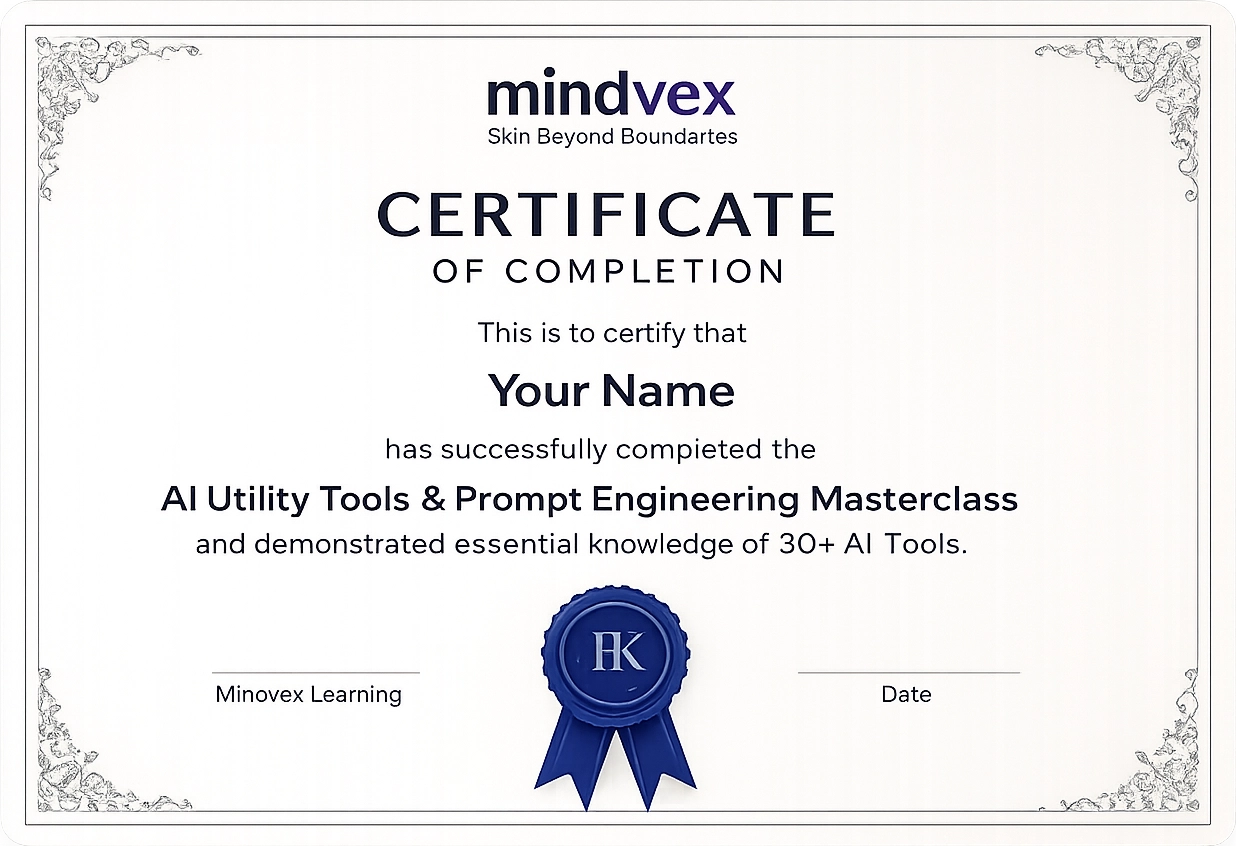
INDUSTRY RECOGNIZED CERTIFICATE

Receive an industry-recognized certificate after successful bootcamp completion.

Career Impact

Maximum cohort size for direct instructor feedback
0
Real capstone projects for your portfolio
0
Weeks from Python-comfortable to job-ready ML practitioner
0
Typical US mid-career ML compensation range
0

What Our Learners Say

Ready To Become An ML Practitioner?

Join a cohort of committed learners building real ML careers.

Frequently Asked Questions

Structural differences: cohort cap of 20 students, four live sessions per week, three real capstone projects with direct code review, and industry mentor Q&A sessions. Many advertised bootcamps are largely pre-recorded video with limited live interaction. This bootcamp is built around live instruction and direct feedback because that consistently produces graduates with employable skills.

For most learners, yes. Self-paced courses rarely produce the depth of hands-on practice and direct feedback that a structured live bootcamp does. The fastest way to know: try one of the capstone-style projects on your own. If you can complete it end-to-end with confidence, you may not need the bootcamp. If you cannot, the bootcamp is built for exactly that gap.

The bootcamp itself does not include a job guarantee. The AI Full Career Track Bundle, which includes the bootcamp as one component, offers an optional Job Guarantee add-on.

Yes, and most learners do. Sessions are scheduled in evening and weekend slots. The honest time commitment is 12–15 hours per week. Learners who cannot sustain that should consider scheduling the bootcamp during a less demanding period at work.

Common profile — especially physics, engineering, and economics graduates. The recommendation is to take Python for AI & Data Science first. Some do attempt the bootcamp with self-study Python, but Python comfort needs to be solid going in, not built during the course.
The bootcamp focuses on classical ML, not deep learning. Scikit-Learn is primary, with XGBoost, LightGBM, and CatBoost for gradient boosting. Deep learning is covered in the dedicated Deep Learning & Neural Networks course.
Each capstone receives written code review from the instructor covering code quality, modeling choices, evaluation rigor, and technical writing. Capstones are also discussed in subsequent sessions.
Many learners do. Mindvex provides invoices, completion certificates, and curriculum documentation that meet the requirements of most US corporate learning programs.

Start Your ML Career Today!

Cohort cap 20. Seats fill weeks in advance. Reserve yours now.