







Live Online Training

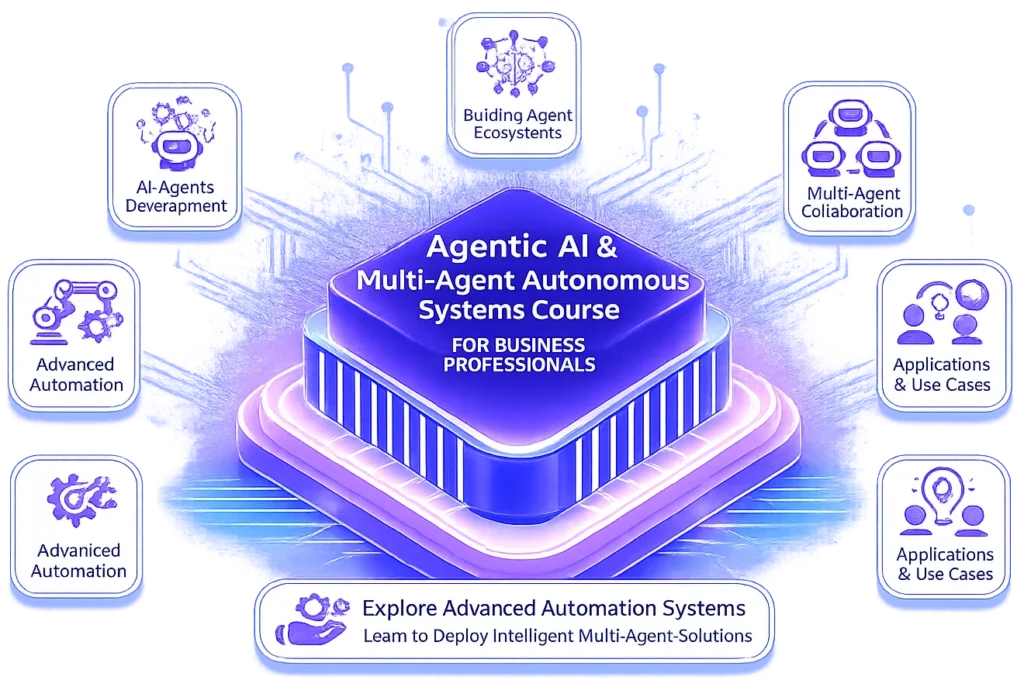
Agentic AI & Multi Agent Autonomous Systems Course

Weeks calibrated for executive calendars
0

The most advanced specialization at Mindvex. Twelve weeks on building autonomous LLM agents and multi-agent architectures. LangGraph, CrewAI, AutoGen, plus framework-free construction. Cohort capped at 15 — the smallest in the catalog because the material requires direct instructor engagement with every learner’s work.

Live Online Training

Cohort Cap: 15 Students

LangGraph + CrewAI + AutoGen

First-Mover Specialization

Trusted by Learners & Professionals from Top Companies

WHY LEARN AGENTIC AI TODAY?

The Most Consequential Shift in Applied AI Right Now

WHAT YOU'LL LEARN

Agent Architectures

Tool Use & Tool Design

Multi-Agent Orchestration

Memory Systems for Agents

LangGraph State Machines

Agent Observability

Safety & Guardrails

Production Agent Engineering

FRAMEWORKS & TOOLS YOU'LL MASTER

LangGraph

Headline framework for stateful agent orchestration

LangChain

Widely adopted LLM application framework

CrewAI

Role-based multi-agent framework

AutoGen

Conversation-driven multi-agent systems

OpenAI API

Direct agent construction on GPT models

Anthropic API

Claude for reasoning-heavy agents

LangSmith

LLM observability and tracing

Langfuse

Open-source LLM observability

Pinecone

Vector memory at scale

Weaviate

Alternative vector database

FastAPI

Deploying agent systems as services
Docker

Containerizing agent applications

COURSE CURRICULUM

01

02

03

04

05

Week 1

Agent Foundations

Week 4

Multi-Agent Architectures

Week 6

LangGraph & Frameworks

Week 8

Production Engineering

Week 11

Advanced Agent Topics

What You Will Learn

The Twelve-Week Curriculum

The curriculum is organized into four arcs across twelve weeks. The course is heavily project-based — every arc produces working agent systems, and the course culminates in a substantial end-to-end multi-agent capstone.

01

Module 1

Agent Foundations & Single-Agent Architectures

The first arc establishes the conceptual and architectural foundation for agentic AI. Many engineers approach agents as a thin layer on LLM API calls and find that working agent systems require fundamentally different design discipline.

Topics include the agent paradigm; ReAct and reasoning-action loops; tool use design (schemas, error handling, common failure modes); function calling and structured outputs in agent contexts; memory architectures (short-term, episodic, semantic); planning and decomposition; and reflection and self-correction patterns.

The arc ends with the first project: a working single-agent system that uses multiple tools, maintains memory, and handles errors gracefully.

You will Explore

ReAct Loops

Tool Use Design

Memory Architectures

Planning Patterns

02

Module 2

Multi-Agent Architectures & Orchestration

The second arc moves from single agents to multi-agent systems — where architectural decisions become most consequential and where the gap between working systems and impressive demos becomes most visible.

Topics include multi-agent design patterns (supervisor-worker, peer-to-peer, hierarchical); specialized agent roles (researcher, planner, executor, critic); inter-agent communication; debate and verification patterns; and agent orchestration frameworks in depth (LangGraph, LangChain agents, CrewAI, AutoGen, framework-free construction). State management at scale rounds out the arc.

You will Explore

Supervisor-Worker Patterns

LangGraph Deep Dive

CrewAI & AutoGen

Framework-Free Construction

03

Module 3

Production Engineering for Agent Systems

The third arc covers the engineering practices that distinguish production agent systems from prototypes. This material is where most agent demos fail in real deployment.

Topics include observability for agent systems (LangSmith, Langfuse); systematic debugging patterns; evaluation methodology for agents (trajectory-level, LLM-as-judge, golden datasets, human evaluation); cost engineering; latency optimization; reliability engineering; safety and guardrails for autonomous systems; and human-in-the-loop patterns.

You will Explore

Agent Observability

Trajectory Evaluation

Cost & Latency Engineering

Safety & Guardrails

04

Module 4

Advanced Agent Topics & Capstone

The final arc covers advanced topics and dedicates time to the substantial multi-agent capstone project.

Topics include long-horizon autonomous behavior; memory at scale (vector memory, graph memory); multi-modal agents; code execution agents; browser-using and computer-using agents; and specialized application domains (customer support, research workflows, sales operations, software development).

Long-Horizon Autonomy

Multi-Modal Agents

Code-Executing Agents

Browser-Using Agents

Each learner builds an end-to-end autonomous multi-agent system, scoped to a real problem of substantive complexity.

Multi-Agent Capstone

Architect • Build • Ship

A substantial multi-agent system addressing a real problem. Recent capstones: autonomous research assistants, multi-agent customer support, agent-based code review systems, domain-specialized analytical agents.

By the end of twelve weeks, you'll have shipped a real autonomous multi-agent system — the kind of portfolio piece the most competitive US AI engineering roles specifically look for.

REAL-WORLD PROJECTS

Single-Agent with Tools

ReAct loop, multi-tool, error handling, memory.

Multi-Agent Research System

Coordinated specialized agents on a research task.

LangGraph State Machine

Production-grade stateful agent workflow.
Agent Observability Setup

Full tracing, monitoring, and evaluation for a live agent.

Multi-Agent Capstone

End-to-end autonomous system for a real problem.

Course Format and Delivery

The course is delivered fully online through live, instructor-led sessions taught by a working agent systems practitioner from the US AI engineering market.

01

Schedule

Four live sessions per week over twelve weeks, in evening and weekend slots that accommodate working professionals across US time zones.

02

Cohort Cap: 15 Students

The smallest cohort cap in the Mindvex catalog. The cap exists because the material requires direct instructor engagement with every learner’s work.

03

Live System Building

Sessions are heavily applied. Learners build agent systems during sessions, not just watch demonstrations.

04

Code Reviews

Major projects and the capstone receive detailed code review with written feedback. Code review is one of the most valuable parts of the course given the architectural complexity of agent systems.

05

First-Mover Positioning

The specialty is new enough that credentials are being established by early practitioners themselves. Graduates are among the early practitioners in the field.

Prerequisites And Technical Requirements

This is an advanced course with real prerequisites. Learners who do not meet them tend not to finish.

Strong LLM application experience — API integration, structured outputs, RAG

Production Python — async, type hints, testing, engineering discipline

ML foundation helpful (ML Bootcamp) but not strictly required

Plan for 12–16 hours per week (4 live sessions + independent practice)

Why Agentic AI Skills Matter In The Us Job Market

The Most Undersupplied AI Specialty.

Agent engineering is currently one of the most strongly differentiated specialties in the broader AI engineering market. Demand from AI-focused companies significantly outpaces the supply of practitioners with genuine agent engineering capability.

Compensation Among the Strongest in Software.

Total compensation at well-funded AI companies for senior agent engineering roles regularly reaches well into seven figures, with the highest end of the market commanding exceptional packages. Demonstrable capability — portfolio work, technical depth in interviews — is what distinguishes candidates.

First-Mover Advantage.

The specialty is new enough that credentials are being established by early practitioners themselves. Graduates completing this course in 2026 enter a market where demand is strong, supply is limited, and demonstrable capability is what unlocks the strongest positions.

Learn From Industry Leaders

Michael Anderson

Lead Instructor — AI & Cloud

Senior AI engineer with extensive experience designing machine learning platforms and deploying enterprise AI solutions.

David Miller

Cloud & MLOps Instructor

Cloud Architect specializing in scalable AI infrastructure, MLOps automation, and multi-cloud deployments for enterprise.

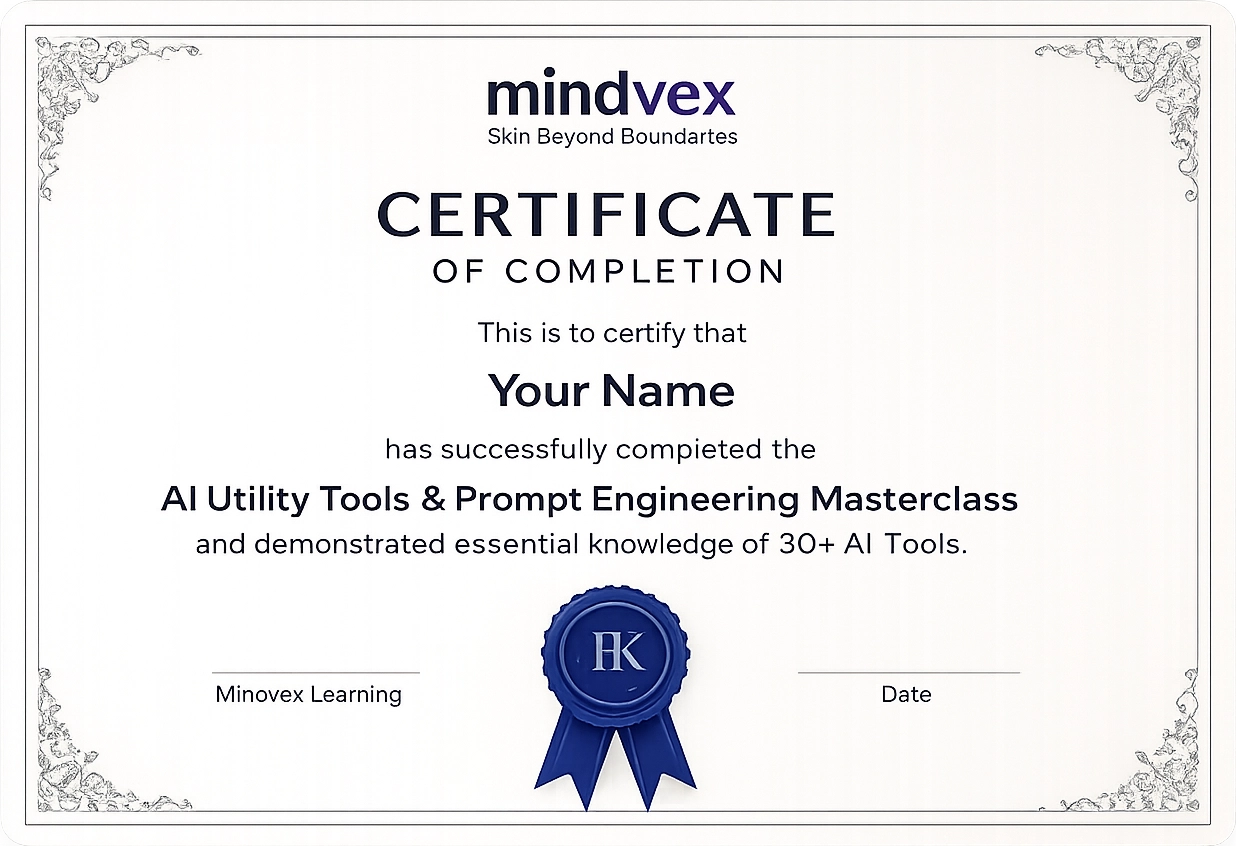
INDUSTRY RECOGNIZED CERTIFICATE

Receive an industry-recognized certificate after successful course completion.

Career Impact

Smallest cohort cap in the Mindvex catalog
0
Major frameworks covered (LangGraph, LangChain, CrewAI, AutoGen)
0
Substantive multi-agent capstone for your portfolio
0
Figure - Top of US market for senior agent engineers
0

What Our Learners Say

Ready To Build At The Frontier?

Join one of the smallest, most advanced cohorts in the Mindvex catalog.

Frequently Asked Questions

General LLM courses cover single-LLM applications — prompts, RAG, structured outputs, fine-tuning. This course assumes that foundation and focuses on multi-step autonomous systems and multi-agent architectures. Qualitatively different material.

LangGraph is the headline because it has emerged as the most production-ready option for stateful agent orchestration. CrewAI and AutoGen are covered for cases where they are preferable. Framework-free construction using underlying APIs is also covered, because that is what production teams often build when frameworks become limiting.

Only with equivalent LLM application experience from work or self-study. The course assumes substantial LLM engineering foundation.

Yes. Computer-using and browser-using agents are covered in Arc 4, with architectural patterns, implementation, and safety patterns particularly important for agents interacting with computer interfaces.

Fundamental architectural patterns (agent loops, tool use, memory, planning, multi-agent coordination) are stable enough to teach reliably even as specific frameworks change. Specific frameworks and model capabilities updated each cohort.

The certificate is one signal. The more important signal is capstone and portfolio work. Hiring teams evaluate candidates on demonstrated technical work — code, project repositories, technical depth in interviews.

Gives a working foundation supporting either applied or research-adjacent path. Pure research careers may want to supplement with formal RL and autonomous-systems research literature.

The 4-sessions-per-week format with 12–16 hours independent practice is the most intensive commitment in the Mindvex catalog. Sustainable alongside full-time work for committed learners but requires deliberate scheduling.

Start Building Agents at the Frontier!

Cohort cap 15. Enter an emerging field early.