







Live Online Training
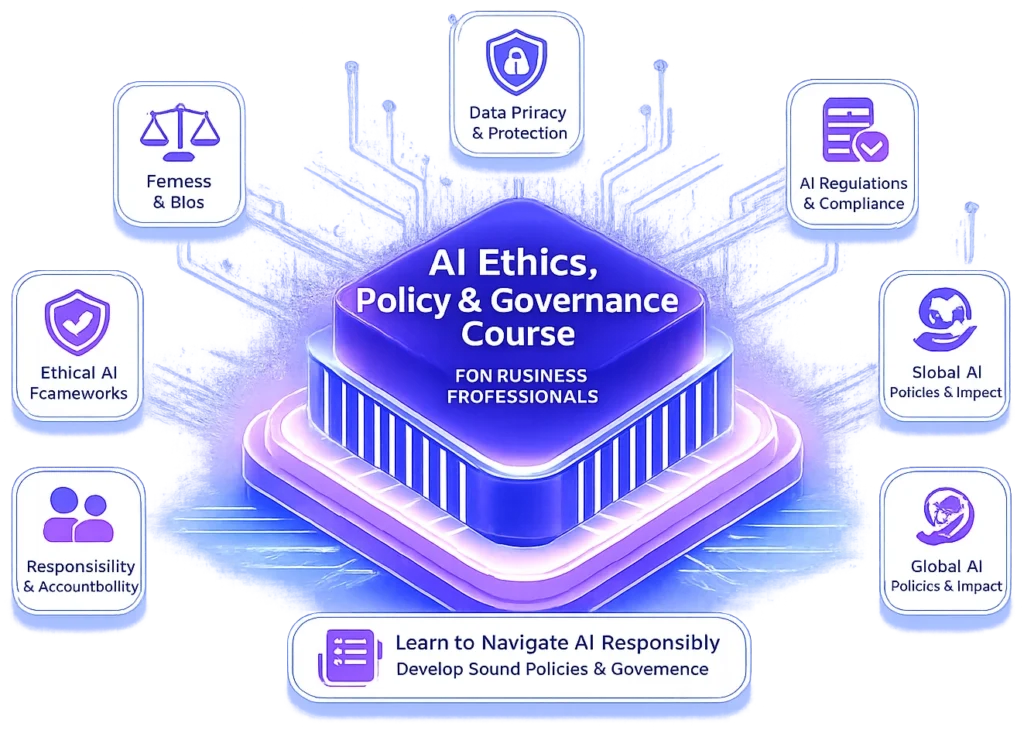
AI Ethics, Policy & Governance Course
Live Online Training
No Coding Required
Executive-Level Program
Group Pricing Available
Trusted by Learners & Professionals from Top Companies
WHY LEARN AI GOVERNANCE TODAY?
Governance Has Become an Operational Requirement
- The EU AI Act is now enforceable and applies extraterritorially to US organizations
- AI governance has shifted from optional concern to immediate operational requirement
- Deep coverage of EU AI Act, NIST AI RMF, ISO 42001, and US federal + state regulation
- Guest speakers from policy, legal, and industry backgrounds throughout
- Four-week compressed format calibrated for senior professional calendars
WHAT YOU'LL LEARN
AI Bias & Fairness Frameworks
EU AI Act Deep Dive
US Federal & State Regulation
NIST AI Risk Management Framework
ISO 42001 & International Standards
AI Governance Program Design
AI Vendor & Procurement Governance
Generative AI–Specific Governance
FRAMEWORKS & STANDARDS YOU'LL EXPLORE
EU AI Act
The most comprehensive AI regulation globally
NIST AI RMF
The de facto US reference framework

ISO 42001
International AI management system standard

OECD AI Principles
The foundational international principles

UNESCO AI Ethics
The global ethics framework

IEEE Ethically Aligned Design
Industry-standard ethical framework

GDPR
Privacy and AI intersections

CCPA
California privacy regulation
FDA SaMD
Healthcare AI regulation
EEOC AI Guidance
Employment AI regulation
Executive Orders on AI
US federal framework

State AI Laws
Colorado, NYC, Illinois, and growing patchwork

COURSE CURRICULUM
01
02
03
04
05
Week 1
AI Bias & Fairness Foundations
- What AI bias actually is
- Fairness frameworks and trade-offs
- The lifecycle of AI bias
- Model cards and datasheets
- Disparate impact and legal context
Week 2
EU AI Act Deep Dive
- Structure and risk categories
- Provider vs deployer obligations
- General-purpose AI models under the Act
- Conformity assessment and CE marking
- Extraterritorial application to US firms
Week 2
US Regulatory Landscape
- Federal executive orders
- NIST AI RMF in depth
- FTC enforcement positions
- Sector-specific regulation (healthcare, finance, employment)
- State-level AI legislation
Week 3
Building Governance Programs
- AI use case intake and review
- Organizational design (AI committees, councils)
- AI procurement governanceg Model (SAM)
- AI literacy programs
- AI incident response
Week 4
Capstone Presentation
- Complete AI governance plan
- Regulatory analysis
- Framework application
- Peer and instructor review
- Executive-level presentation
What You Will Learn
The Four-Week Curriculum
The curriculum is intensive and tightly organized. Four weeks is deliberately compressed to fit a senior professional’s calendar while still covering the full breadth of working AI governance practice.
The first module establishes the technical understanding of how AI systems can fail in ways that AI governance is built to address. The treatment is accessible — no coding — but goes deep enough to support credible decision-making.
Topics include what AI bias actually is (statistical vs social meaning); fairness frameworks (group, individual, equalized odds, demographic parity) with attention to the impossibility theorems; the lifecycle of AI bias and intervention points; algorithmic accountability (impact assessments, model cards, datasheets); disparate impact and the legal context; and high-stakes AI applications in healthcare, criminal justice, financial services, and employment.
You will Explore
Bias Sources & Types
Fairness Trade-Offs
Model Cards & Datasheets
High-Stakes Applications
The second module covers the regulatory landscape in depth, with focused attention on the EU AI Act because of its scope, enforceability, and extraterritorial reach.
Topics include the EU AI Act in detail (structure, risk categories, obligations, timeline, extraterritorial reach); roles in the AI value chain (providers, deployers, importers, distributors); general-purpose AI model obligations; conformity assessment and CE marking; the US regulatory landscape (executive orders, NIST, FTC, sector-specific regulation); state-level AI legislation (California, Colorado, Illinois, NYC); other major jurisdictions (UK, Canada AIDA, China); and industry-specific regulation (healthcare, financial services, employment).
You will Explore
EU AI Act Deep Dive
US Federal Landscape
State-Level Regulation
Sector-Specific Rules
The third module moves from the regulatory landscape to the practical work of building and operating responsible AI programs.
Topics include the NIST AI RMF (Govern-Map-Measure-Manage); ISO 42001 and international standards; other major frameworks (OECD, UNESCO, IEEE); building an AI governance program (committees, councils, escalation paths); AI use case intake and review; AI procurement and vendor management; AI incident response; and AI literacy programs.
You will Explore
NIST AI RMF
ISO 42001
Governance Program Design
Vendor Risk Management
The final module brings regulatory understanding and framework knowledge together into practical implementation guidance, with a capstone exercise applying the material to a realistic case.
Topics include AI risk and compliance integration; privacy and AI (GDPR, CCPA); intellectual property considerations; AI and consequential decisions about individuals; and generative AI–specific governance patterns.
Privacy & AI
IP & Generative AI
Consequential Decisions
Generative AI Governance
Each learner develops a complete AI governance plan for a realistic scenario, presented in the final session.
Capstone Project
Analyze • Design • Present
A complete AI governance plan for a realistic scenario. Past capstone scenarios: AI deployment in a healthcare system, AI procurement at a financial services firm, generative AI policy at professional services, AI governance at a mid-sized enterprise crossing the AI Act threshold.
By the end of four weeks, you'll lead AI governance conversations with genuine regulatory and framework depth — not surface familiarity.
REAL-WORLD PROJECTS
AI Bias Assessment
Applied evaluation of a real AI system for bias risks.

EU AI Act Compliance Review
Analysis of a hypothetical US organization's obligations.

NIST AI RMF Application
Working application of the framework to a real use case.

AI Vendor Evaluation
Governance-focused evaluation of a real vendor.

Governance Plan Capstone
Complete AI governance plan for a realistic scenario.

Course Format and Delivery
The course is delivered fully online through live, instructor-led sessions.
01
Schedule
Three live sessions per week over four weeks, in evening slots that work for senior professionals across US time zones.
- Each session runs approximately 90 minutes.
02
Case-Based & Discussion-Driven
Curriculum anchored in real cases — governance decisions, regulatory enforcement, notable AI incidents.
- Build judgment through real cases.
03
Guest Speakers
Attorneys, policy professionals, chief AI officers, and compliance leaders join sessions for direct working perspective.
- Learn from those doing the work.
04
Cohort Discussion
Cross-organizational and cross-functional peer network active during and after the course.
- Senior peer learning.
05
No Coding Required
Absolute statement, not a hedge. Built for non-technical professionals throughout.
- Zero technical prerequisites.
Prerequisites And Technical Requirements
There are no technical prerequisites. Learners need:
Professional experience — the course is paced for senior professionals
Comfort with basic technology (browser, email, productivity software)
Laptop and stable internet for video sessions
Willingness to spend 3–5 hours per week on reading and capstone
Why AI Governance Matters In The Us Job Market
An Emerging Professional Specialty.
AI governance has emerged as a distinct professional specialty in the past three years. Roles like AI ethics officer, head of responsible AI, AI governance lead, and chief AI officer did not exist as named positions five years ago and now appear regularly in senior US corporate hiring.
Compensation That Reflects Scarcity.
Specialist AI governance roles at US enterprises and consulting firms typically reach into the mid-to-high six-figure range. Senior chief AI officer positions reach higher. The scarcity of qualified practitioners keeps compensation strong.
Impact for Senior Professionals.
For most learners taking this course, impact is not a new dedicated role but a step-change in effectiveness on AI matters within an existing role. Being the lawyer, executive, or HR leader who can navigate AI governance credibly translates directly to expanded scope and visibility.
Learn From Industry Leaders
Michael Anderson
Lead Instructor — AI & Cloud
- AWS Certified
- 10+ Years Industry Experience
- Published AI Researcher
Senior AI engineer with extensive experience designing machine learning platforms and deploying enterprise AI solutions.
David Miller
Cloud & MLOps Instructor
- Cloud Architect
- Google Cloud Certified
- Enterprise MLOps Specialist
Cloud Architect specializing in scalable AI infrastructure, MLOps automation, and multi-cloud deployments for enterprise.
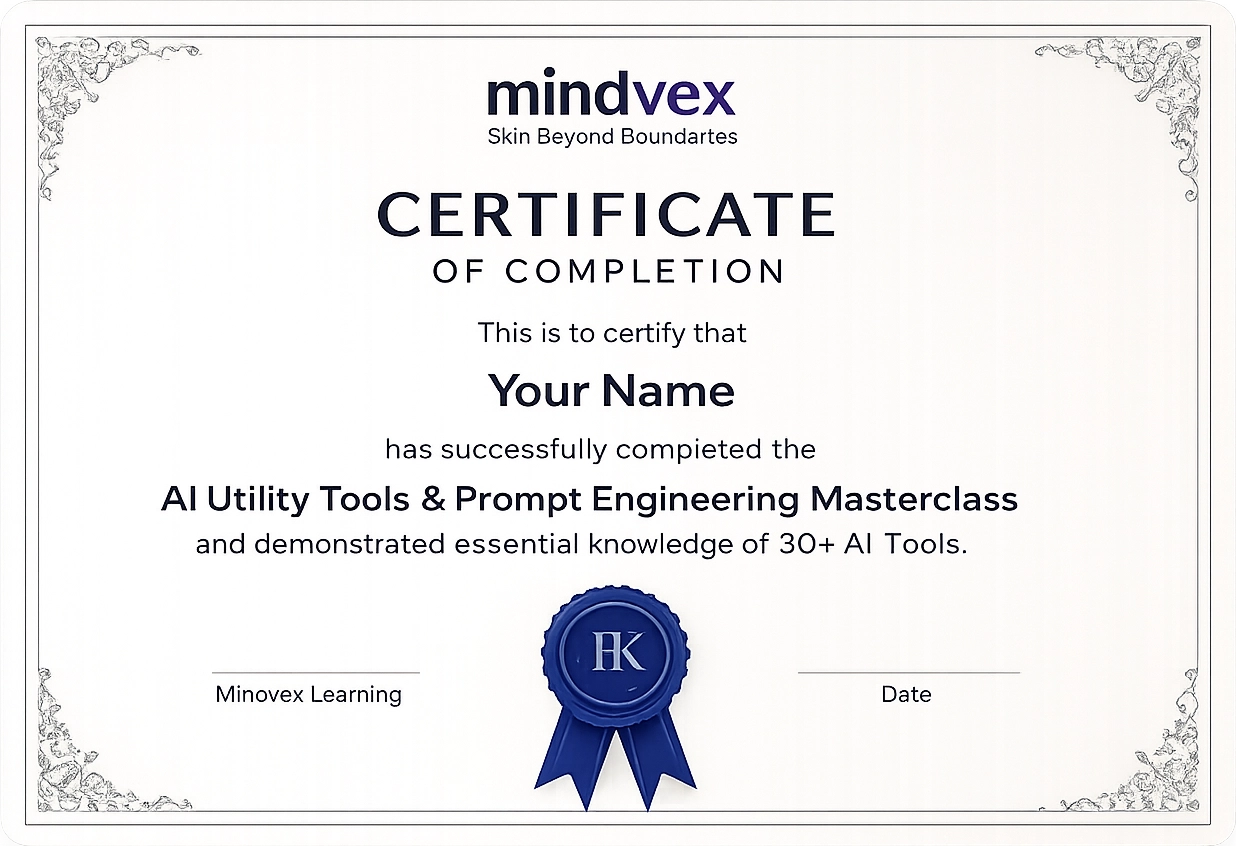
INDUSTRY RECOGNIZED CERTIFICATE
Receive an industry-recognized certificate after successful course completion.
- Industry Recognized
- LinkedIn Shareable
- Verifiable Certificate
- Executive-Ready
Career Impact
What Our Learners Say
The AI for Data Analytics course gave me the exact tools needed to interpret complex data streams quickly. The practical framework for integrating modern AI directly into existing analytical workflows was immediately applicable.

The multi-agent simulations in the Advanced Python for LLM & Multi Agent Systems course completely transformed our engineering team's approach to complex system design. Exceptional depth and real-world utility.

Enrolling our product team in Agentic AI & Multi Agent Autonomous Systems provided the strategic edge we were missing. The hands-on project structures made deploying autonomous agents far more straightforward.

After taking NLP with LLMs, I was able to fine-tune and deploy a custom retrieval-augmented model in weeks. The instructors cover production-grade deployment strategies that you rarely find in standard online courses.

The Executive Diploma in Deep AI & Cloud Intelligence offered a clear, high-level strategic overview without glossing over technical rigor. It helped our leadership team align our enterprise cloud architecture with modern AI solutions.

Bridging the gap between prototype models and production infrastructure can be tough, but MLOps & AI in Production laid out the best practices clearly. Highly recommended for any engineering group scaling AI services.

Ready To Lead AI Governance?
Join a cohort of senior professionals building credible AI governance capability.
Frequently Asked Questions
No. The course is built specifically for non-technical professionals. Technical material supporting governance work is taught accessibly, no coding required.
Three differences. First, the course covers the regulatory landscape — particularly the EU AI Act — at depth working legal and compliance practice requires. Second, guest speakers and case-based discussion build practical judgment. Third, the capstone produces a working AI governance plan learners can adapt to their own organizational contexts.
The course gives comprehensive working knowledge suitable for senior governance professionals. Attorneys formally advising clients typically combine this with deeper independent study of the legal text and ongoing regulatory developments.
Yes. Group pricing at 10+ seats, and private cohorts available for larger enrollments. This is one of the most common patterns at senior enrollment levels.
Yes. Calibrated for senior professionals throughout. Cohort regularly includes VPs, SVPs, and C-suite leaders. Pace, case-based structure, and manageable independent workload designed around executive calendars.
Major regulatory landmarks (EU AI Act, NIST AI RMF, US executive orders, major state laws) are stable enough to teach reliably. Evolving specifics updated each cohort, and the course teaches frameworks for tracking ongoing developments.
Not currently accredited for formal CLE or CPE. Some employers accept Mindvex completion certificates as part of general professional development requirements. Consult your specific licensing context.
Common target for legal, compliance, and executive learning budget. Mindvex provides invoices, completion certificates, and documentation suitable for corporate L&D approval.
Start Leading AI Governance!
Group pricing available. Private cohorts for corporate teams.
- Live Executive Cohort
- EU AI Act Deep Dive
- Guest Practitioners
- Group Pricing