





Live Online Training

MLOps & AI in Production Course

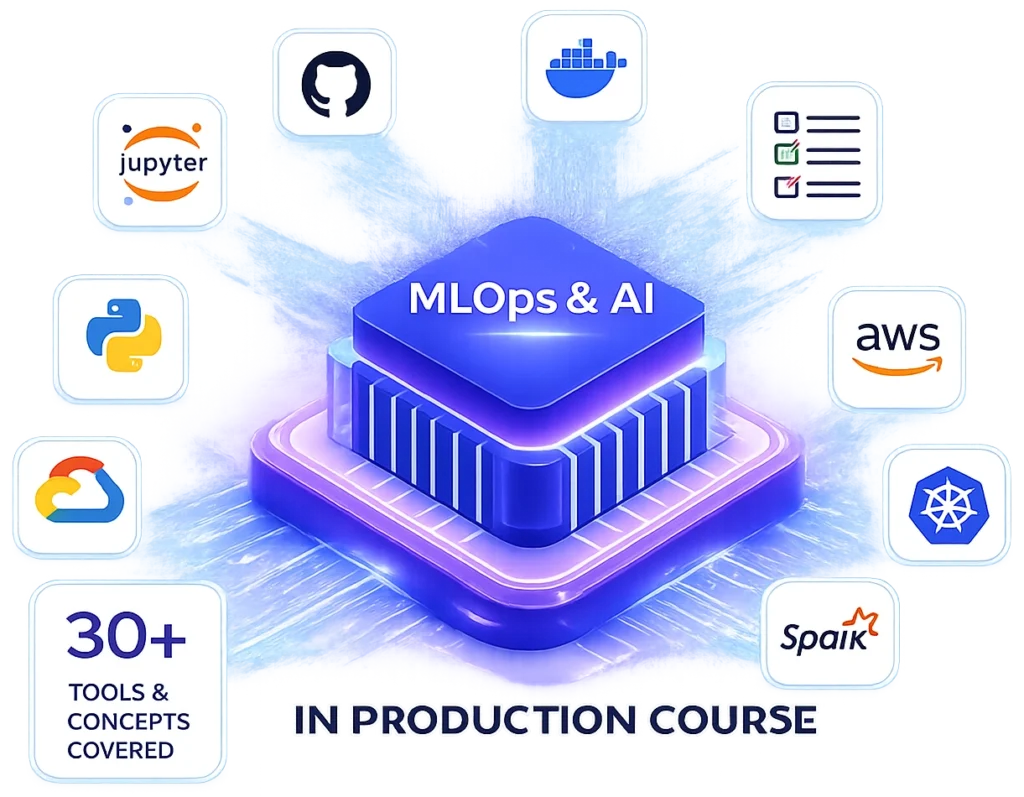
Twelve weeks of live instruction on the engineering discipline that separates ML research from ML that actually ships. CI/CD for ML, Docker and Kubernetes, AWS SageMaker, Azure ML, GCP Vertex AI, monitoring and drift detection. Built for ML engineers ready to take work into production.

Live Online Training

AWS, Azure & GCP

Kubernetes for ML

Production Engineering

Trusted by Learners & Professionals from Top Companies

WHY LEARN MLOPS TODAY?

Where ML Investment Turns Into ML Returns

WHAT YOU'LL LEARN

CI/CD for Machine Learning

Data & Model Versioning

Docker for ML Workloads

Kubernetes for ML

AWS SageMaker

Azure ML & GCP Vertex AI

Monitoring & Drift Detection

Feature Stores in Production

TOOLS & PLATFORMS YOU'LL MASTER

Docker

Container fundamentals for ML

Kubernetes

Orchestration for production ML

MLflow

Open-source ML lifecycle management
DVC

Data version control for reproducibility

Weights & Biases

Experiment tracking

AWS SageMaker

Amazon's managed ML platform

Azure Machine Learning

Microsoft's ML platform

Google Vertex AI

GCP's ML platform

FastAPI

API framework for model serving

GitHub Actions

CI/CD for ML pipelines

Terraform

Infrastructure as code

Great Expectations

Data quality monitoring
COURSE CURRICULUM

01

02

03

04

05

Week 1

Reproducibility & CI/CD

Week 4

Docker & Kubernetes

Week 6

Model Serving

Week 8

Cloud Platforms

Week 11

Monitoring & Drift

What You Will Learn

The Twelve-Week Curriculum

The curriculum is organized into four arcs across twelve weeks, covering the full lifecycle of a production ML system from CI/CD through deployment, monitoring, and maintenance.

01

Module 1

CI/CD and Reproducibility for Machine Learning

The first arc establishes the engineering foundation that production ML rests on. Most ML practitioners come from notebook-based workflows that are not reproducible, are not testable, and do not scale to production.

Topics include reproducibility for ML (harder than in regular software), Git workflows for ML projects, testing ML code including stochastic outputs, CI/CD for machine learning (GitHub Actions, GitLab CI), DVC and data versioning, and experiment tracking with MLflow and Weights & Biases.

The arc ends with the first project: a complete ML training pipeline with CI/CD, experiment tracking, and data versioning.

You will Explore

Reproducibility in Practice

Git Workflows for ML

CI/CD Pipelines

Experiment Tracking

02

Module 2

Containerization, Kubernetes & ML Deployment

The second arc covers the deployment infrastructure that production ML systems run on. The course is opinionated about the value of containerization and orchestration for ML work and teaches both at production depth.

Topics include Docker for ML (with attention to large images, dependency complexity, GPU support); Kubernetes fundamentals for ML engineers; deployment patterns (batch, real-time, async); model serving frameworks (FastAPI, TorchServe, TensorFlow Serving, KServe, BentoML); A/B testing and gradual rollout patterns; and GPU workloads in Kubernetes.

The arc ends with the second project: a containerized ML service deployed to Kubernetes with proper observability and rollback capability.

You will Explore

Docker for ML

Kubernetes Fundamentals

Deployment Patterns

Model Serving Frameworks

03

Module 3

Cloud Platforms and Managed ML Services

The third arc covers the managed ML platforms on AWS, Azure, and GCP. Most US organizations build their ML platforms on one of these three clouds, and practitioner familiarity with the major managed services has become an expected skill.

Topics include AWS SageMaker in depth (Training, Endpoints, Pipelines, Feature Store, Model Registry); Azure Machine Learning with the broader Azure integration; Google Cloud Vertex AI; choosing between managed and self-hosted; feature stores in production (Feast, Tecton, managed options); and model registries and artifact management.

This arc is heavily hands-on. Learners work in real cloud accounts (with cost-controlled lab environments provided).

You will Explore

AWS SageMaker

Azure ML

GCP Vertex AI

Feature Stores

04

Module 4

Monitoring, Drift, and the Operational Practice

The final arc covers what happens after deployment — the monitoring, drift detection, retraining, and incident response work that determines whether deployed models actually deliver sustained value.

Topics include model monitoring in depth (distinguishing data, concept, and prediction drift); production logging for ML; performance monitoring and SLOs; data quality monitoring with Great Expectations; retraining strategies (triggered, scheduled, continuous); incident response for ML; and cost management.

Model Drift Detection

Data Quality Monitoring

Retraining Strategies

Cost Management

The final two weeks include the capstone project.

Capstone Project

Build • Deploy • Monitor

A complete ML pipeline from data ingestion through deployment, monitoring, and retraining. Recent capstones: fraud detection with online monitoring, recommendation systems with A/B testing infrastructure, forecasting systems with drift detection and triggered retraining.

By the end of twelve weeks, you'll have shipped a real production ML system — the kind hiring teams for MLOps roles specifically look for.

REAL-WORLD PROJECTS

Reproducible ML Pipeline

CI/CD, experiment tracking, and data versioning end-to-end.

Containerized ML Service

Docker + Kubernetes deployment with proper observability.
SageMaker Deployment

Full production deployment on AWS with monitoring.
Drift Detection System

Real-world monitoring for a deployed model.
Full Production Capstone

End-to-end pipeline with retraining and incident response.
Course Format and Delivery

The course is delivered fully online through live, instructor-led sessions taught by working MLOps practitioners from US technology companies.

01

Schedule

Three live sessions per week over twelve weeks, in evening and weekend slots that accommodate working professionals across US time zones.

02

Cloud Lab Environments

Cost-controlled cloud lab environments on AWS, Azure, and GCP. No separate cloud accounts required.

03

Live Infrastructure Work

Sessions blend instruction with hands-on practice in real command lines, Kubernetes clusters, and cloud consoles.

04

Code Reviews

Major project submissions and the capstone receive direct code review with written feedback.

05

Cohort Discussion & Office Hours

Active discussion channel and weekly office hours for architectural conversations.

Prerequisites And Technical Requirements

This is an advanced course. Prerequisites are real:

ML foundation — training models, evaluation workflows (ML Bootcamp recommended)

Strong Python including packaging and dependencies

Comfort with Git, command line, and basic Linux

Laptop with 16 GB RAM, modern OS, stable internet

Why Mlops Skills Matter In The Us Job Market

The Bridge From Model to Business Value.

Most models built never make it to production. MLOps engineers are the practitioners who close that gap. The demand reflects the reality: every organization investing in ML needs someone who can take work from notebook to reliable system.

Consistent, Steady Demand.

MLOps engineer, ML platform engineer, and ML infrastructure engineer roles are among the most consistently in-demand US technical positions. The demand is less cyclical than pure data science because it reflects operational necessity.

Compensation That Reflects the Scarcity.

Entry-level MLOps and ML platform roles commonly start in the low-to-mid six-figure range. Mid-career reaches high six-figures. Senior practitioners at large employers and AI-focused companies regularly reach into upper six-figure and seven-figure territory.

Learn From Industry Leaders

Michael Anderson

Lead Instructor — AI & Cloud

Senior AI engineer with extensive experience designing machine learning platforms and deploying enterprise AI solutions.

David Miller

Cloud & MLOps Instructor

Cloud Architect specializing in scalable AI infrastructure, MLOps automation, and multi-cloud deployments for enterprise.

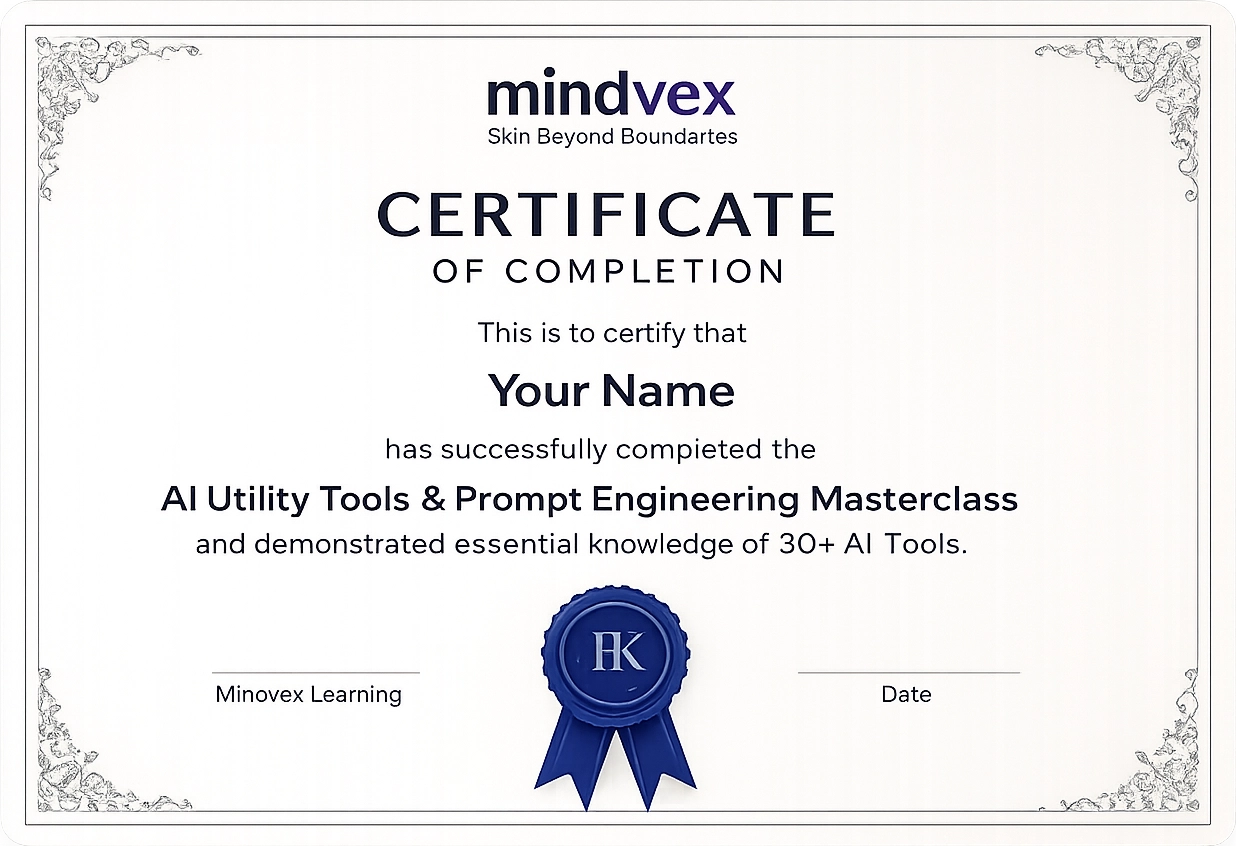
INDUSTRY RECOGNIZED CERTIFICATE

Receive an industry-recognized certificate after successful course completion.

Career Impact

Major cloud platforms covered (AWS, Azure, GCP)
0
Weeks from ML-ready to production engineer
0
Full production capstone for your portfolio
0
Figure -Typical US MLOps starting compensation range
0

What Our Learners Say

Ready To Ship Production ML?

Join a cohort of engineers taking ML work from notebook to production.

Frequently Asked Questions

No. The course teaches Docker, Kubernetes, and cloud platforms from a working starting point, paced for ML practitioners without prior DevOps depth. Learners with a DevOps background will move faster through the infrastructure arcs.

Major clouds have converged enough on ML offerings that proficiency in any one transfers reasonably to the others. The course covers all three at working depth. Most learners develop a primary cloud with working familiarity in the other two.

General patterns apply to LLM deployment, but the specific challenges (large artifacts, GPU memory, inference optimization, streaming) are not the primary focus. Combine this with Advanced Python for LLM & Multi Agent Systems and NLP with LLMs for LLM production work.

MLOps is built on DevOps foundations but adds ML-specific concerns: data versioning, model artifact handling, training pipelines, drift monitoring. DevOps practitioners need to add the ML side. ML practitioners need to add the DevOps foundations.

No. The course provides cost-controlled lab environments on all three cloud platforms.

Major cloud ML services and core MLOps tools (Kubernetes, Docker, MLflow, DVC) are stable enough that foundational material remains valid. Specific offerings are updated each cohort.

Sequential recommended, not parallel. Both are 3–4 sessions per week with substantial workload.

Yes, one of the most common profiles. Software engineers with strong infrastructure backgrounds need to add ML-specific concerns and ML-adjacent tooling.

Start Your MLOps Journey!

Cloud lab environments included. Cohorts begin monthly.